RSS
Showing posts with label luxemburg. Show all posts

Belgium a Little Country with a Big History

Belgium has a rich history from its humble beginning to a prosperous nation in the heart of Europe. Belgium is a founding member of the European Union and hosts its headquarters, as well as those of other major international organizations, including NATO. Belgium has a population of about 10 million. Belgium is home to two main linguistic groups, the Flemish and the French-speakers, mostly Walloons, plus a small group of German-speakers.

Belgium's two largest regions are the Dutch speaking region of Flanders in the north, with 59% of the population, and the French speaking southern region of Wallonia, inhabited by 31%. The Brussels Region, officially bilingual, is a mostly French speaking enclave within the Flemish Region and has 10% of the population. A small German speaking Community exists in eastern Wallonia. Belgium's linguistic diversity and related political and cultural conflicts are reflected in the political history and a complex system of government.

The name 'Belgium' is derived from Gallia Belgica, a Roman province in the northernmost part of Gaul that was inhabited by the Belgae, a mix of Celtic and Germanic peoples. Historically, Belgium, the Netherlands and Luxembourg were known as the Low Countries, which used to cover a somewhat larger area than the current Benelux group of states. From the end of the Middle Ages until the 17th century, it was a prosperous center of commerce and culture. From the 16th century until the Belgian revolution in 1830, many battles between European powers were fought in the area of Belgium, causing it to be dubbed the battleground of Europe. Upon its independence, Belgium eagerly participated in the Industrial Revolution and, at the end of the nineteenth century, possessed several colonies in Africa. The second half of the 20th century was marked by the rise of communal conflicts between the Flemishand the Francophones ffueledby cultural differences on the one hand and an economic evolution of Flanders and Wallonia on the other hand. These still active conflicts have caused far-reaching reforms of the formerly unitary Belgian state into a federal state.

The 1830 Belgian Revolution led to the establishment of an independent, Catholic and neutral Belgium under a provisional government and a national congress. Since the installation of Leopold I as king in 1831, Belgium has been a constitutional monarchy and parliamentary democracy. Although the franchise was initially restricted, universal suffrage for men was introduced in 1893 and for women in 1949. The main political parties of the 19th century were the Catholic Party and the Liberal Party, with the Belgian Labour Party emerging towards the end of the century. French was originally the single official language adopted by the nobility and the bourgeoisie. It progressively lost its overall importance as Dutch became recognized as well. This recognition became official in 1898 and in 1967 a Dutch version of the Constitution was legally accepted.

After World War II, Belgium joined NATO as a founding member and formed the Benelux group of nations with the Netherlands and Luxembourg. Belgium became one of the six founding members of the European Coal and Steel Community in 1951 and of the European Atomic Energy Community and European Economic Community, established in 1957. The latter is now the European Union, for which Belgium hosts major administrations and institutions, including the European Commission, the Council of the European Union and the extraordinary and committee sessions of the European Parliament.

Belgium is a fantastic country to visit and see the immense culture displayed in the wonderful cities and towns. Ask anyone who has been to Belgium and you will find that they love this little country with a big history.

Belgium-The prosperous city

The heartbeat of Europe, the country Belgium attracts numerous travelers every year .Country where three official languages are spoken ,has a glorious past, fine art, foodstuff and structural designs at every nook and corner, when it is compared to the countries in its vicinity.

Snuggled between the Netherlands, Germany, Luxembourg and France, Belgium covers approximately 30,527 square kilometres and is a dwelling to almost 10 lakh people. Extended from the charming and pleasing Ardennes area in the south to the desolate North Sea shoreline in the North, it is crisscrossed lengthily by a set of canals.

Belgium became an integral part of the Frankish empire in the year 1100 and had the benefit of a Golden Age at some stage in the 14th century under the governance of the French Duke of Burgundy. This was a golden period and a time of immense riches and creativity when the town of Antwerp became the supreme port in Europe. The country was attacked two times by Germany, firstly in in 1914 and then another time in 1940. Belgium's populace is separated between Flemish speakers that comprises almost 60% and French speakers who are almost 40%.

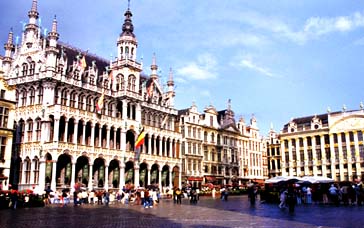
The  Belgians are accredited with inventing oil painting and the master pieces of such artists as Van Eyck, Brueghel and Rubens are well known all over the world. The nation is in addition celebrated for such miscellaneous activities as making best chocolate and lace-making, beer and comic strips. Herge, the originator of the distinguished comic strip Tintin, was Belgian. The capital city of the country, Brussels, is the capital of the European Union too. It has Europe's most gorgeous and fine-looking central square, the Grand Place. The most excellent restaurants in the country can be found on the Rue des Bouchers, which is just a short distance from the Grand Place. At this particular place you can taste lobster, crab and mussels washed down with outstanding Belgian beer.

The town of Bruges is Europe's most conserved middle aged city. It has two medieval centers and some of the most beautiful and commendable art collections in the  country. Antwerp is a must visit place to gulp in its air of discolored magnificence and its vivacious cafés and bars. Take pleasure in a walk in the gorgeous Ardennes area of deep valleys and high forests. Let the strength of this most European of countries pierce your soul and etch some lifetime memories.

Belgium Ardennes – A mixture of nature, tourism and history

Located at the crossroads of the old continent, often referred to as "the essence of Europe", Belgium is a small yet densely populated country in Northern Europe that borders the North Sea, Germany, Luxembourg , France and the Netherlands. Famous for its chocolate and beer, Belgium attracts millions of tourists every year mainly due to an interesting combination of nature and history. Perhaps one of the best examples is the Ardennes region located in southern Belgium, in the south-eastern part of Wallonia region. The Ardennes is a vastly forested plateau host to abundant wildlife and beautiful landscapes; the Ardennes form the so-called "green lung" of Belgium – a perfect place to visit for those who love the flora and fauna as well as for those interested in folklore and old traditions.

Due to its strategic location, the region has been at the centre of numerous historical events: starting with the Roman legions, the invasion of the Germanic tribes, the region was occupied in turns by the Spanish, Austrians and the French. One of the most famous historical events linked to the region is the Battle of the Bulge that took place in the Ardennes during the Second World War. At the end of 1944, the Allied Armies of USA, Britain and Canada were on the brink of attacking Germany. Hitler thought that the alliance in the western front could be weakened by splitting the British and American line in half. Therefore he ordered a massive counter-offensive whose goal was to take back the French territory, to divide, encircle and destroy the enemy armies.

The official historical name of the battle is the Ardennes Offensive; the Germans called it the Operation "Watch on the Rhine" after their hymn "Die Wacht am Rhein" while the French named it "la Bataille des Ardennes". Considered to be a part of the Ardennes-Alsace campaign, the battle that took place between 16 December 1944 and 25 January 1945 is known to the general public as the Battle of the Bulge due to the fact that the Germans created a bulge in the Allied front line. The offensive was supported by three German armies and was fought against what were mainly American forces. Hitler wanted to capture the major port of Antwerp thus eliminating an important source of supplies for the Allies, and after that to surround and destroy the enemy armies. The counter-offensive was planned as a secret operation and, although the US intelligence predicted a massive German attack, the Allies were caught by surprise.

The strategy of the Germans consisted of a massive armored attack. The winter in Ardennes with extremely low temperatures, low clouds and heavy fog favored the Germans because it minimized the advantage of the Allies. At the beginning the attackers had a great success and managed to punch a bulge in the enemy front line. However, this lasted only a few days.

Because of the fierce resistance they faced and the reinforcements received by the Allies, the Germans were not able to stick to the timetable as planned. The improving weather conditions allowed the Allies to use their air force by launching devastating attacks and by bombing the enemy supply lines. Because of this, the Germans soon found themselves unable to supply their armored force with fuel which was a turning point in the battle. When the shortage of fuel became critical, the Germans were forced in numerous occasions to abandon their equipment in order to avoid being surrounded or captured. Because of massive losses of forces and equipment, on the 7th of January 1945 Hitler decided to stop any offensive operations in the Ardennes and started the withdrawal of his forces.

The Battle of the Bulge remains an important battle in the history of the Second World War, especially for the Americans who paid the highest price in terms of forces involved and registered casualties. The Ardennes region still reflects the echoes of this event represented in numerous battlefield museums, memorials and historical monuments. Therefore the Belgium Ardennes remains one of the most visited places in Belgium, a mixture of nature, tourism and history visited by historians, veterans of the Second World War as well as by common travelers eager to discover one of the most beautiful regions in Europe.

Belgium – A Great Holiday Destination At Any Time Of Year

With bordering countries like the Netherlands, Germany, France and Luxembourg, it's not surprising that Belgium is a country with a rich and inspiring history as well as being a melting pot of languages, traditions and culture. Belgium is perhaps best know for three iconic things – cuisine, Nato and fine art. These attractions make Belgium an interesting place to visit at any time of year with something for all the family to enjoy.

Foodies the world over hold Belgium in his regard. Home to many a Michelin Star restaurants, Belgium is also the birthplace of french fries, the waffle and, of course, has strong links with chocolate. Zeebrugge – one of the countries Gothic cities – even boasts a chocolate museum where visitors can try their hand at making some of regions famous pralines and truffles.

Regarded for its cuisine, Belgium also plays an important role in the political, financial and economic well-being of Europe and the wider world with the European Union and NATO both based in Brussels. An early participant in Europe's industrial revolution means Belgium has a strong business basis and also plays host to financial giants such as Fortis insurance amongst others.

If chocolate or politics isn't your thing, Belgium also boasts the lure of fine art for those with a creative eye or a penchant for galleries and museums. The Flemish Renaissance and Baroque painting means Belgium is not only a milestone in the evolution of modern painting but also home to some wonderful works by painters such as Hans Eworth and Bernard van Orley. Take a wander around Belgium's many cities and you may also be interested by the flourishes of Art Nouveau with Belgian architects instigators of the movement.

Are you a fan of cuisine, culture, art or politics? Belgium offers these interests every day of the year so don't think twice and book your trip today!

The Most Essential Lures of Belgium

Encompased by France, Germany, Luxembourg and the Netherlands, Belgium excites the visitor with its miscellaneous panoramas: the rivers and passes of the Ardennes create a strong contrast with the ample plains that take up a wide area of the country, the majestic forests from the German and Luxembourg borders with the endless sand shores of the northern coast.

In Belgium, you will discover a land that is impressive through its well-known towns, with countless castles and cathedrals that will leave lasting memories.

BRUSSELS
Brussels
Brussels it's the place where you will be shocked to hear lots of unfamiliar languages. It has recently obtained the „international city" status, apart from being the „capital" of the European Union and United Nations. In Brussels you will meet a wide range of people, from bureaucrats and eurocrats to citizens from Congo, Northern Africa or Turkey, who supported the cultural and culinary variety of the place. Looking past skyscrapers and contemporan city's sumptuous boulevards, you will find that Belgium's archaic soul is still complete, living in the old-fashioned districts of mere workers or in the bourgeois neighborhoods.

There are two languages that are being used in Belgium: Flemish, the language of the German origin settlers from the north, and French. While on the streets of this beautiful city you should give great awareness to detail: old stores with extraordinary constructive specifics, sumptuous walls built in Art Deco style, doors and gates adorned with really special sculptures, temples slipped in the walls of buildings at the corner of the street, bearing the image of the Virgin Mary.

"The soul" of Brussels is the Grand-Place market, built in Baroque and Gothic styles, where you can witness the march of patriciate families descendants at the beginning of July or you can delight yourself with theater plays or outdoor concerts. In the south lies the area known as The Template, where the pre-nineteenth century Belgian essence has been preserved just about intact. In the north you will perceive the old labor neighborhood of Marolles, where street names today signify competence types that were practiced by their former tenants.

A tripper that has a weakness for sublime should not neglect a stopover at the Museum of Art, home of some of the most important works of Pieter Breughel - including the renowned Fall of Icarus - and of Peter Paul Rubens, and to the Museum of Modern Art, which prouds itself with the work of Francis Bacon, Salvador Dali, Henry Moore and Pablo Picasso.
Ghent

GHENT

Ghent is the Flemish capital of the country, built in Gothic and Renaissance style, with a population of only 230,000 inhabitants. Impressive is the buildings construction from Graslei, the city's old port. There are two rivers, Leie and Lieve, that overpass this area. From the St. Michielsbrug bridge, the landscape is sublime: in the north you will contemplate the Gravensteen castle, home of Flemish counts between ages 9-12, where you can still admire a large range of torture instruments. The other castle, Geraard of Duivelsteen, dated from the13th century, has the same malevolent notoriety.
Bruges
BRUGES

This classy Flemish city went through a serious growth since the Middle Ages. Through this port, the town became a great commercial transit of goods from Italy, the Far East, England or Russia. Bruges was famous all over the world for its wool products and the rare talent of its upholstery masters. The well-known Markt market dates from the 13th century; climbing its 366 stairs, you will contemplate the distinguished sight of this old city. Heilige Bloed Basiliek Basilica will speak to you about the times of the second crusade, when the Patriarch of Jerusalem - according to the legend - brought some drops of blood of Jesus to the Count of Flanders.

Winter Walks in the Belgian Ardennes

Interested in exploring the Belgian Ardennes on foot this winter? It's the ideal location for a good dose of fresh air in the hills. But before you scurry off to find your hiking boots, I feel obliged to give you three small pieces of advice. First, there is a high chance that you will become addicted, because the Ardennes is a wonderful region for walking. It's easily accessible by car, train or bus; there are hundreds of well-marked walking routes of various lengths; the scenery is breathtaking; the nature is fascinating; and yet you are never too far from a café, hotel or village shop. In other words, once you have walked in the Ardennes, your free weekends may never be the same again.

Second, be prepared for sudden changes in the weather. I have set off in glorious sunshine to find myself in a hail storm just an hour later. In addition, the higher you ascend, the colder will be that chill wind. So dress for the worst eventuality. For a winter walk, this means warm clothing, sensible footwear, a waterproof coat, gloves and a hat. Take sufficient water and snacks; personally I always take a thermos flask of hot soup. And do not leave your mobile phone at home.

Third, take a detailed walking map. These are readily available from local bookshops and tourist offices. Plan in advance to know where you intend to walk, and the length and duration of your route. This will help avoid unpleasant surprises, especially if you are taking children with you. So, armed with these hopefully helpful warnings, it's time to pack up your backpack and go. But where? It's easy to look at a map of the Ardennes and feel overwhelmed by all the possibilities, so a few of my personal favorites might help you decide where to start.

Hertogenwald Forest, Eupen

I am particularly fond of this area as it was my first encounter with the Ardennes. It offers a splendid mixture of landscapes: impenetrable, silent, coniferous forests; deserted moorland stretching to the horizon; and picturesque babbling brooks. It can be reached by taking the N67 south-east from Eupen. Halfway to Monschau is the Ternell Nature Center. This old forester's house was built in 1770 and transformed two hundred years later into a museum and information center. 

I recommend the route heading north-east from the nature center into the forest. The first time I walked this route I had to cross the River Getzbach by taking off my boots and socks and wading across. When I returned a few years later, I was quite disappointed to find a bridge had been installed. Next to the nature center is a cosy tavern serving excellent snacks. When ordering, don't forget that you are in German-speaking Belgium!

River Ourthe, La Roche-en-Ardenne

If you want to make a weekend of your trip to the Ardennes, La Roche-en-Ardenne is an excellent base from which to explore the River Ourthe, as it offers numerous hotels and restaurants. Most people walking in this area will be drawn to the well-known sights of the Nadrin Belvedere, the Nisramont Dam, Saint Margeurite's Cross and the confluence of the two Ourthes (Orientale and Occidentale). 

All of these are well worth visiting, but if like me you prefer to steer away from the crowds, then I would recommend trying one of the less popular but equally outstanding walks from the villages of Maboge, Grande Mormont or Bonnerue. My tip would be the 8 km Champs Thomas walk from Maboge. The deserted uplands seem to be a favorite hunting ground at this time of the year for hen harriers. These rare birds of prey are similar to the more commonly seen buzzards but have a white rump and fly with their wings held in a shallow 'V' as they glide low over the fields in search of a mouse or vole.

Anlier Forest

Even deeper into the Ardennes, between Martelange and Habay-la-Neuve in the province of Luxemburg, is the huge 7000-hectare Anlier Forest, one of the biggest forests in the country. Its northern slopes reach an altitude of 517 meters and are drained by the tributary streams of the River Sûre, which flows into Germany as the Sauer and eventually into the Moselle. The forest is so vast that parts of it are virtually unexplored. 

Living in its deeper recesses are deer, wild boar, badgers, foxes and wildcats. I have enjoyed many hours walking along the banks of the rivers Sûre and Géronne hoping to catch a glimpse of an otter, which is making a comeback in this region. Beavers have also been re-introduced into these river systems. A particularly attractive walk starts from Volaiville and gives you close-up views of two watermills on the Géronne. These three walks will give you an excellent introduction to this lovely area in the south of Belgium.